Yale researchers have devised a cryptographic method that could theoretically let people use open-source AI models from a phone – in a privacy-respecting way, without revealing their questions to the server doing most of the work.
The setup could help people who want to ask about medical records or confidential work but lack a computer powerful enough to run the model themselves, according to a Sept. 9 research paper published on the academic-research site Arxiv.
The system lets a "computationally constrained client, such as a mobile device," use a more powerful server “while hiding the client’s private input and supporting verification, all with negligible server overhead,” the researchers wrote.
The paper lists Ben Merbaum, Mohammad Amin Raeisi and Wenhao Wang first. They worked with Yale computer science professors Charalampos Papamanthou, Katerina Sotiraki and Fan Zhang, Wang’s adviser. Zhang and Wang are affiliated with IC3, the Initiative for Cryptocurrencies and Contracts.
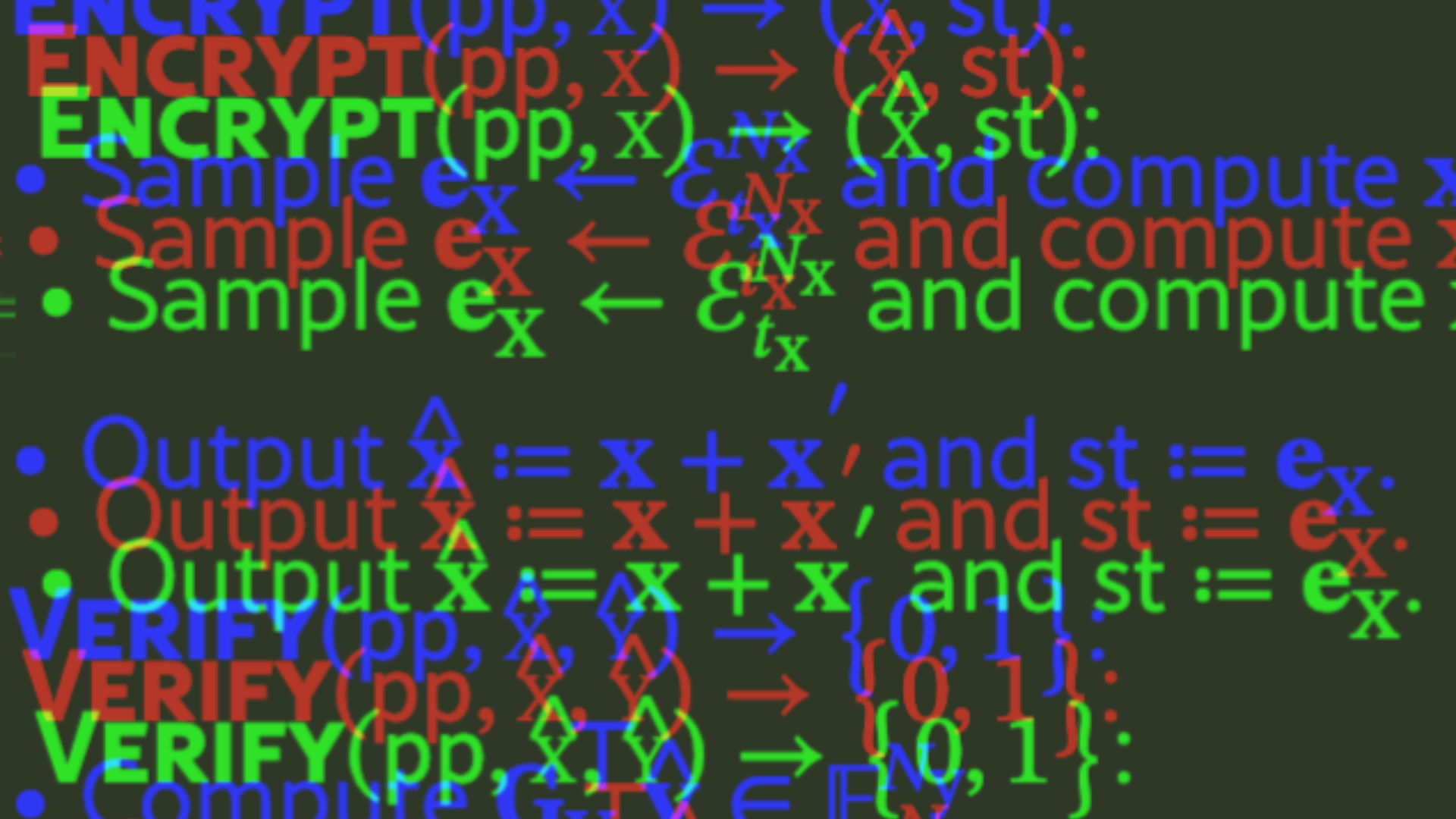
Under the method, called Maverick, the user’s device disguises the data with random-looking numbers before sending the hardest calculations to the server. The device then removes the disguise from the results, checks the server’s math and finishes the work locally.
The prototype was tested on one model, Qwen3-4B, using a short prompt. The researchers say reducing the back-and-forth between device and server remains a goal.
The DeAI angle: Advances in math could make it easier to farm out sensitive AI jobs to independent computing providers in a privacy-respecting way, a major goal of many decentralized AI projects. DeAI News has previously reported on other techniques to preserve privacy on AI requests, such as relying on protected areas inside chips.
HOW AI WAS USED IN THE PRODUCTION OF THIS PIECE: The first draft was generated on ChatGPT using a custom skill designed to write stories based on reports. I used the Distro Publisher MCP connector to file the draft directly to DeAI News on the Distro web app. I then edited the piece using the built-in DistroVerse story editor.